
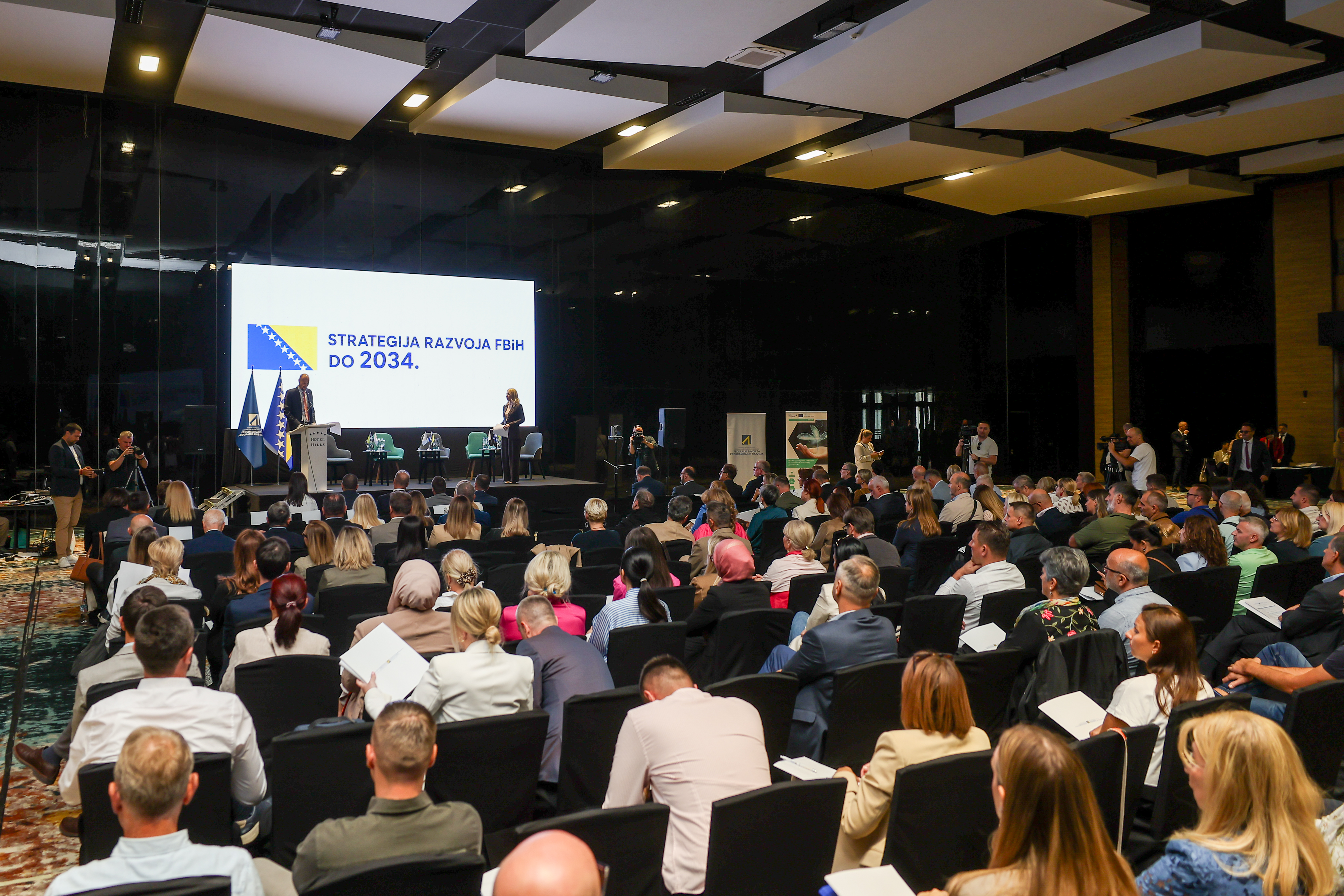
Sarajevo, 17th September 2026 - Development Programming Institute of FBiH, as the key coordinator of the development planning process of the Federation of BiH, organized the conference that marked the official start of the preparation of the Development Strategy of the Federation of Bosnia and Herzegovina until 2034, following the decision of FBiH Government to prepare the document.
The conference opened a discussion about the long-term development of the Federation of BiH.
Nermin Nikšić, Prime Minister of FBiH, in his opening remarks emphasized that during the process of drafting strategic development plan, it is essential to understand what is realistically achievable and where to direct funds and resources to reach the best results. This must not become another document, adopted and shelved. "We want the Federation that is qualitatively using its resources, investing in people and knowledge, preparing and implementing projects, responsibly managing public funds, and creating better conditions for work, investment, and development," he stated.
Rijad Kovač, Acting Director, FZZPR, emphasized that the implementation of the Federation's Development Strategy should bring concrete changes that will ensure better life for citizens. He presented the methodology and timeline for drafting the document, the process led by the Institute's team, responsibly and transparently, in accordance with the law, and with the participation of all relevant stakeholders in the Federation of BiH.
The conference proceedings unfolded across two panels. During the first, representatives of the academic community discussed the development challenges and choices facing the Federation of BiH, highlighting the need for public administration reform, along with accelerated digitalization, including financial reform, as well as the acceleration of EU integration through the use of accession funds, as well as the necessity of political stability.
Through the second panel, representatives of institutions, from the municipal to the federal leve, discussed the linking strategic priorities with budgets (including public investment programs) and the vertical and horizontal coordination of institutions during the planning and implementation of development documents.
Representatives of institutions at various levels of government, the academic community, socio-economic partners, experts, and other interested stakeholders participated the conference